
Why It Matters That Ceramic Implants Don’t Corrode
1. From Metal Implants to Modern Ceramics: How Implant Materials Evolved
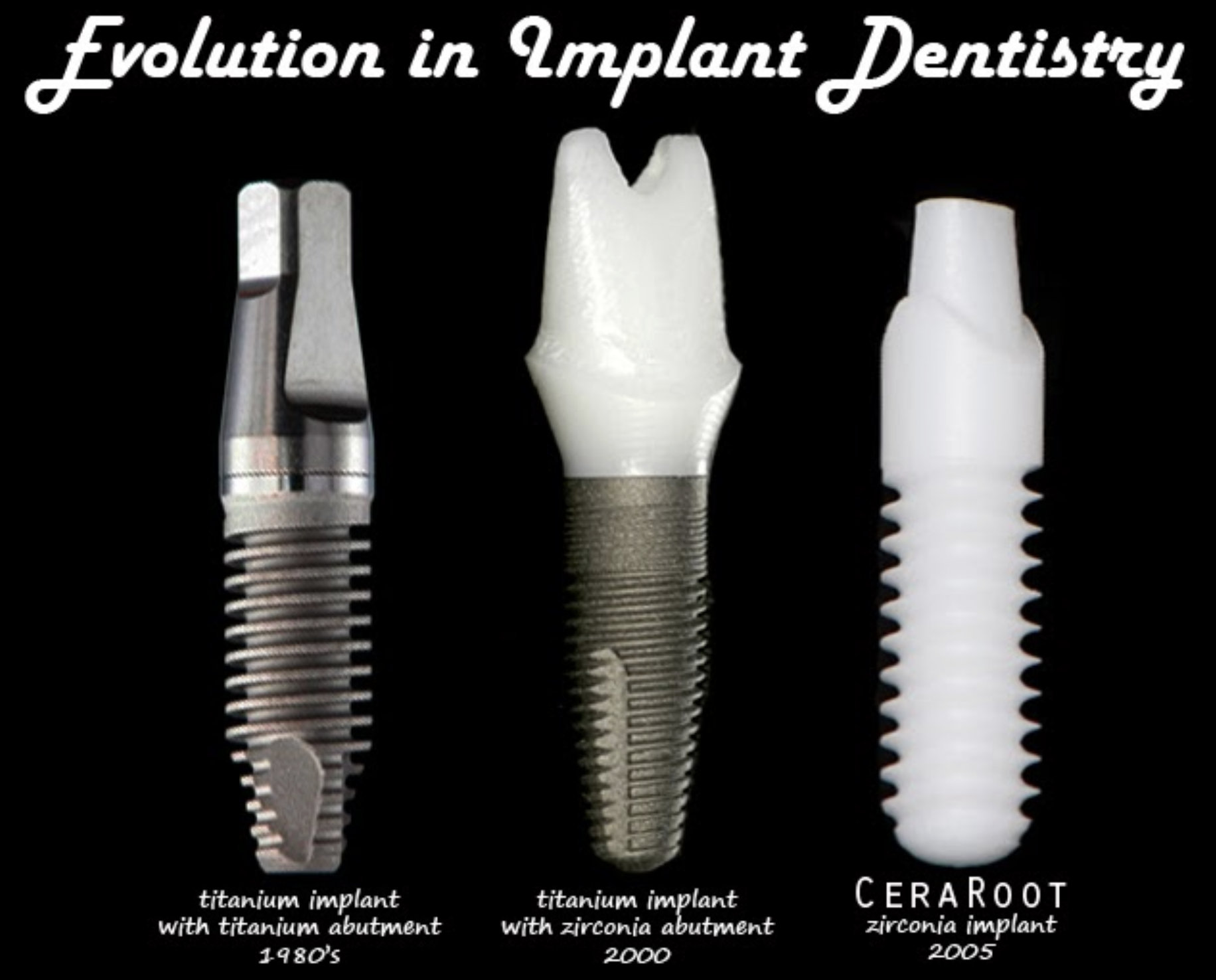
For decades, dental implants were almost exclusively made from titanium, a metal chosen for its strength and durability. In the 1980s, traditional implants consisted of two parts: a metal fixture that was screwed into the bone and a separate abutment where the crown was attached. These implants worked well mechanically, but they introduced metal into the body, and over time dentists and researchers began noticing limitations — inflammation, esthetic concerns, micro-gaps where bacteria could enter, and corrosion-related issues.
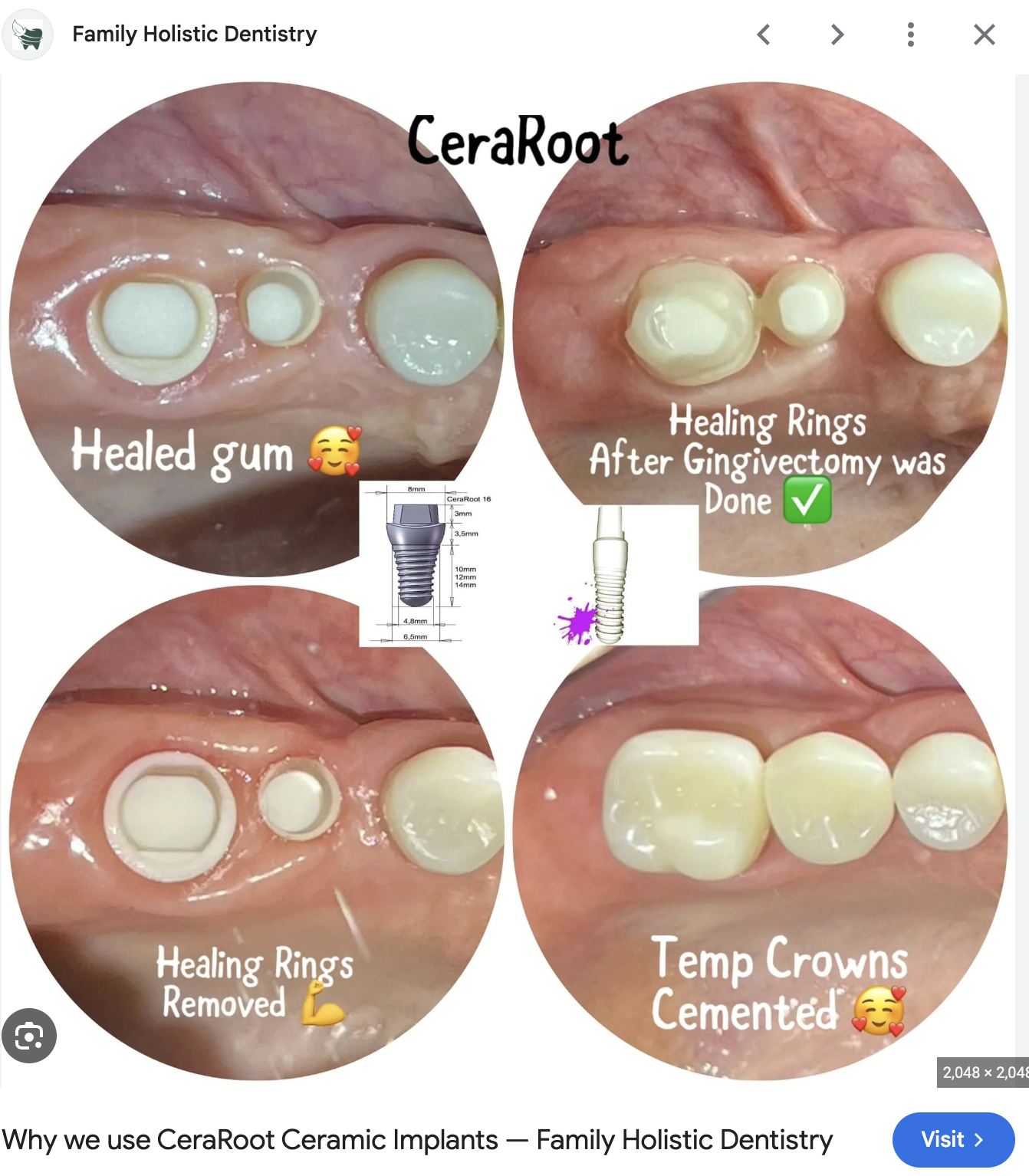
By 2000, improvements in ceramic material science made it possible to create ceramic abutments, which were already known to be more tissue-friendly. A major advancement came in 2005 with the introduction of the CeraRoot one-piece full ceramic implant, later approved by the FDA in 2011. Because the fixture and abutment are fused into a single body, CeraRoot implants eliminate internal connections, reduce bacterial accumulation, and provide a completely white, metal-free alternative ideal for natural esthetics.
2. Understanding Corrosion and Why Metals React Inside the Body
One of the most important differences between ceramic and metal implants is corrosion. Titanium is a metal, and all metals placed in the body undergo some degree of electrochemical corrosion. Corrosion occurs when a material interacts with its environment — in this case, saliva, enzymes, food acids, bacteria, or electrical currents from other metals — and gradually breaks down at a microscopic level.
When titanium corrodes, it can release trace metal ions or particles into the surrounding tissues. Research shows that these particles may accumulate in bone and soft tissue and can contribute to local inflammation or peri-implant complications in certain individuals. Some studies have also found elevated concentrations of metal traces systemically.
Zirconia, the ceramic used in CeraRoot implants, does not corrode. It is chemically inert, non-metallic, and does not release ions or participate in electrical (galvanic) reactions. This stability is one of the reasons zirconia performs predictably in the long term and integrates well with soft tissues.
3. Biocompatibility, Sensitivities, and the Role of Metal Exposure
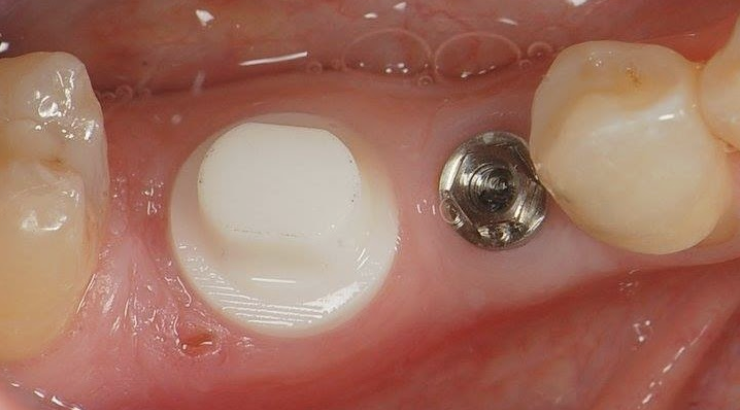
While titanium works well for many patients, hypersensitivity to titanium or other metals is an area of ongoing study. Laboratories using MELISA® technology report that approximately 4% of patients tested show sensitivity to titanium. Symptoms can vary widely, from skin rashes to muscle pain, inflammation, or fatigue. Titanium exposure in modern life is common — titanium dioxide (E171) is found in toothpaste, candies, sunscreens, cosmetics, medications, and certain dental materials.
Metal particles released by corrosion can bind to proteins in the body, and in sensitive individuals, this may trigger an immune response. The MELISA® test can help identify hypersensitivity, and in several clinical studies, patients experienced improvement after titanium implants were removed, with follow-up testing showing normalization of immune reactivity. Additionally, some titanium alloys may contain trace nickel, which can be relevant for patients with known nickel sensitivity.
4. Why Corrosion Resistance Is Important in Modern Implant Dentistry
Ceramic implants offer a metal-free, corrosion-free option for patients who prefer stable, non-reactive materials. Because zirconia does not corrode, does not release ions, and does not darken or cause gray shadowing, it remains stable and esthetic over time. The one-piece CeraRoot design reduces the presence of micro-gaps, helping support clean gum attachment and favorable tissue response.
As ceramic technology has advanced, ceramics have become not only strong enough for implant dentistry but also appreciated for their chemical inertness and long-term stability. For patients who value biocompatibility, a metal-free approach, or who have autoimmune or inflammatory concerns, ceramic implants provide an alternative that avoids corrosion and offers excellent functional performance.
To learn more about ceramic implant materials, the science behind corrosion resistance, and real patient experiences, we invite you to explore our testimonial playlist on our youtube channel to see how ceramic implants are used in our practice and what to expect during treatment. You can also visit our service page on our website